
The shift from utilitarian bathroom to personal sanctuary isn’t a luxury trend — it’s the new standard. Rainfall showers, soaking tubs, natural materials, and layered lighting are redefining the room most people spend the least time thinking about.
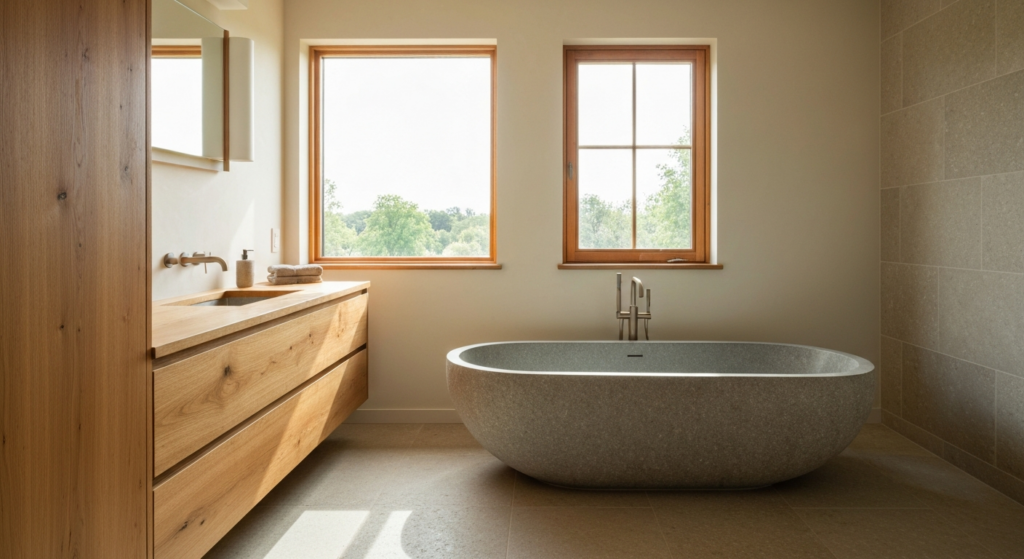
Not long ago, a well-designed bathroom meant clean grout, matching fixtures, and enough storage. That bar has moved considerably. Homeowners are now approaching bathroom renovations with the same intentionality they’d bring to a living room or a primary bedroom — thinking about how the space feels to be in, not just to use.
The catalyst is simple: the bathroom is where many people begin and end their days. Designing it to support rest, ritual, and genuine decompression isn’t indulgence. It’s considered design. Wellness is driving many renovation choices today — steam showers, softer lighting, and subtle touches like aromatherapy are showing up more often in both renovations and new builds, less about indulgence and more about creating a space that helps people unwind without leaving the house.
The shower has become the centerpiece
In the traditional bathroom hierarchy, the bathtub held the throne. That’s shifting. For everyday use, the shower has become the primary experience — and homeowners are investing accordingly.
Showers are becoming the main event, with rainfall heads and steam options bringing that cloud-like, enveloping feel you expect from a high-end spa. Deep soaking and freestanding tubs are still important, but they’re used more intentionally — as a treat at the end of the day rather than the everyday workhorse.
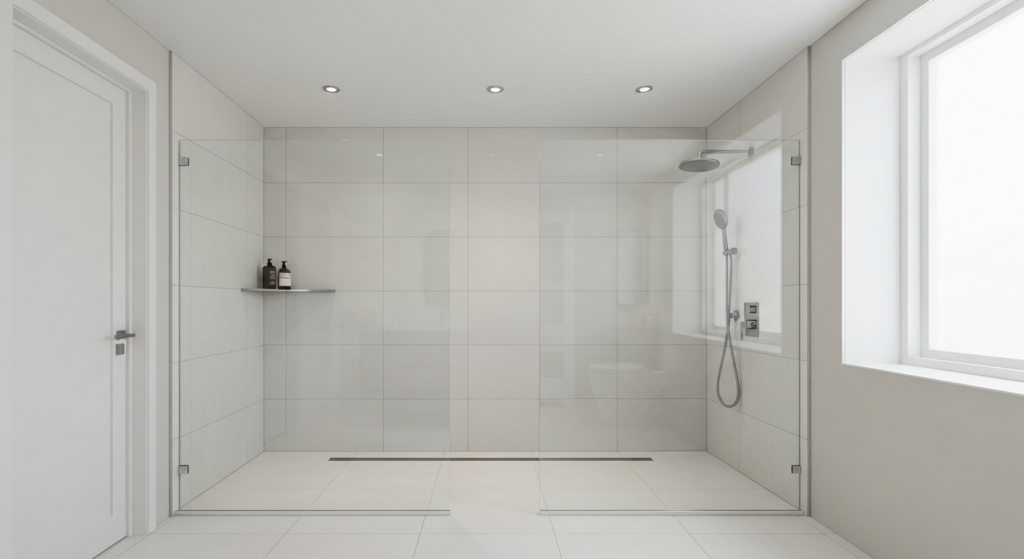
The move toward oversized, open-concept walk-in showers — often with frameless glass or no enclosure at all — changes the entire feel of a bathroom. Oversized walk-in showers with frameless glass enclosures and rainfall-style fixtures are incredibly popular in high-end bathroom remodels, with body jets and a built-in bench creating a full-body relaxation experience. Where space allows, the wet room — a fully waterproofed, floor-to-ceiling tiled space that houses both shower and tub — is gaining serious momentum. The result is a bathroom that feels open, seamless, and genuinely spa-like, without the visual clutter of hardware, curtains, or enclosure frames.
“The bathroom is evolving into a private decompression space designed for mindfulness, self-care and restoration — not just a room you pass through.”
The freestanding tub: sculpture first, fixture second
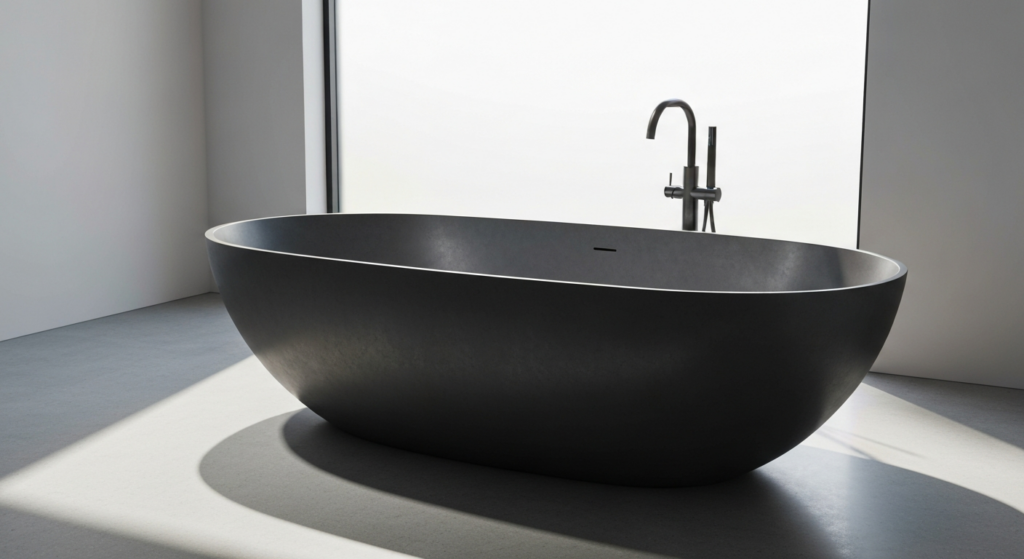
A freestanding soaking tub does something no other bathroom fixture can quite match: it anchors the entire room as a visual statement while also being genuinely functional. Unlike standard built-in tubs, a freestanding model acts as a sculptural centerpiece, elevating the room’s aesthetic from purely functional to deeply restorative — engineered for long, comfortable soaks with ergonomic designs that support the body.
Modern freestanding tubs range from stone resin and cast iron to acrylic with brushed metal feet. The silhouette matters as much as the material: a sleek, low oval reads contemporary; a deep, vertical-sided Japanese soaking tub reads minimalist and meditative; a classic slipper tub with a curved back leans traditional but remains timeless.
For smaller bathrooms, a freestanding tub isn’t always practical — but when the footprint allows, positioning it near a window or against a statement tile wall transforms it from an object into an experience. A floor-mounted tub filler in a warm metallic finish — unlacquered brass, brushed bronze, matte black — completes the moment.
Natural materials: the foundation of the retreat feeling
The fastest way to shift a bathroom from functional to restorative is to change the surface materials. Bathroom color trends draw heavily from nature — soft clay, olive green, sandy beige, and terracotta tones are replacing stark whites, while natural textures and calming elements such as bamboo shelves, eucalyptus bundles, and pebble tile floors are becoming essentials for a soothing environment.
Wood vanities, stone countertops, and pebble-tile flooring introduce organic textures that bring the calming essence of nature indoors. Textured surfaces such as tadelakt and zellige are gaining popularity for their ability to create immersive, cohesive aesthetics — an approach ideal for spa-like bathrooms.
The key distinction is intentionality. A bathroom that uses natural materials throughout — stone floor, wood vanity, clay-toned walls, linen textiles — feels cohesive in the way a good hotel room does. Random combinations of trendy materials, on the other hand, can feel busy. Choose a dominant material and let supporting elements echo it.
Material pairing guide
- Honed marble or travertine floor + tadelakt or limewash walls + warm oak vanity — Organic Mediterranean
- Large-format matte porcelain + reclaimed timber shelving + brushed nickel — Contemporary Minimal
- Zellige tile feature wall + concrete basin + dark walnut + brass — Artisan Modern
- Pebble mosaic shower floor + cedar bench + stone countertop + matte black — Nature Spa
Lighting: the upgrade most homeowners underestimate
Lighting is where many bathroom renovations fall short — not because homeowners don’t care, but because it’s easy to treat as an afterthought once the tile, fixtures, and vanity are decided. In a spa-oriented bathroom, lighting is as important as any of those surfaces.
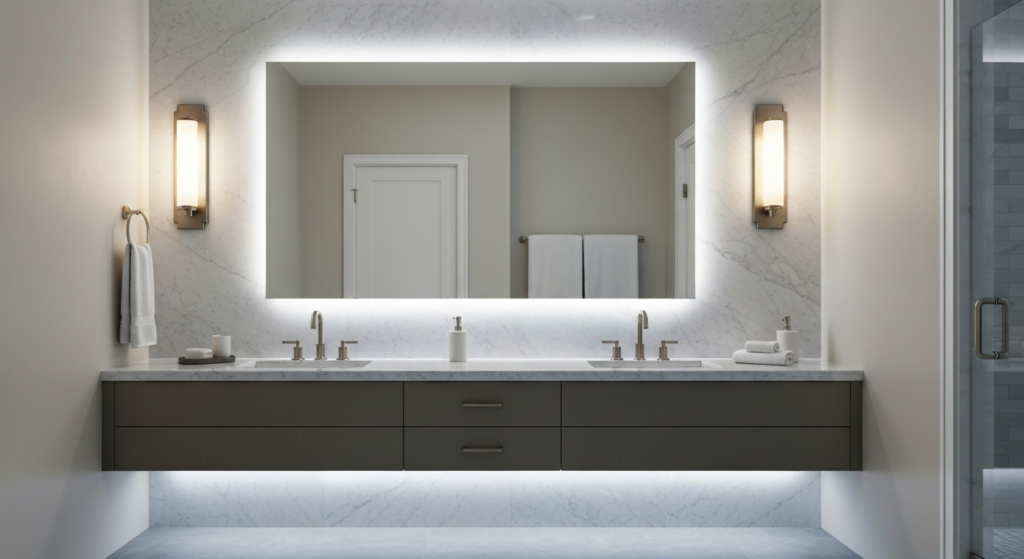
Oversized pendant lights, sculptural sconces, and backlit mirrors are no longer accents — they’re central design elements, with strategic lighting capable of opening up small bathrooms and creating an illusion of more space while enhancing the overall atmosphere.
The most effective approach layers three sources: ambient (overhead or recessed, dimmable), task (flanking the mirror at face height, not above it), and accent (under a floating vanity, inside a niche, or behind a freestanding tub). Dimming all three independently lets the same bathroom function for a bright morning routine and a low-light evening soak. Heated towel rails and underfloor radiant heating complete the sensory picture — warmth underfoot after a shower is one of the simplest and most effective luxury upgrades available.
Smart features worth considering
Technology in the bathroom has moved past novelty. In 2025, smart mirrors provide the latest news, weather updates, and your schedule; heated floors add a touch of luxury with smartphone control; and smart showers let you customize water temperature, flow, and even play music for a spa-like experience.
For multi-function shower systems, opting for independent controls — where the rain shower, body jets, and handheld wand can operate separately — allows you to conserve water when a full, high-volume experience isn’t needed. This practical note matters: a thermostatic shower valve that pre-sets your preferred temperature and flow isn’t just convenient — it saves water every single morning.
This isn’t about budget — it’s about intention
The spa bathroom isn’t the exclusive domain of large renovations. In a compact apartment bathroom, the same wellness principles could show up as a wet-room layout with a floating vanity, a single bold tile feature, biophilic touches through plants and color, and a heated floor powered by a smart thermostat — the common thread is intention.
A bathroom that feels restorative doesn’t require every upgrade on this list. It requires that the upgrades you choose work together — that the materials, lighting, and fixtures create a coherent sensory environment rather than a collection of individual improvements. Start with one area: the shower experience, or the lighting, or the vanity materials. Done well, a single focused upgrade can shift the entire feeling of a room.
The fixtures and surfaces you’ll find in the products we carry are selected with exactly this in mind — built for daily use, designed to last, and capable of turning an ordinary bathroom into the room in your home you most look forward to walking into.