
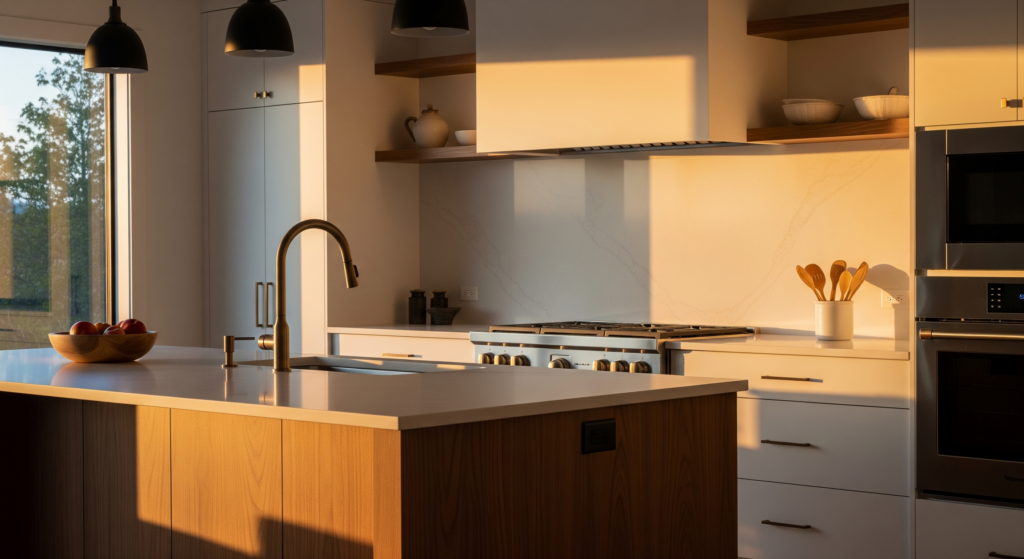
From dramatic slab backsplashes to multifunctional islands — here’s how today’s homeowners are reimagining the most important room in the house.
The kitchen has always been the emotional center of a home — but the way homeowners are designing it has shifted dramatically. Gone is the safe era of all-white cabinets and ceramic subway tile. In its place: richer materials, bolder color, integrated technology, and a new obsession with function as much as form.
Whether you’re planning a full renovation or a targeted upgrade, understanding where kitchen design is heading can save you from choices you’ll outgrow — and help you invest where it counts most.
Slab backsplashes: the single biggest visual upgrade
The most talked-about shift in kitchen aesthetics right now is the move away from tiled backsplashes toward full slab installations. Running your countertop material — quartz, quartzite, or stone — vertically up the wall creates a seamless, almost architectural effect. There are no grout lines to maintain, and the visual continuity makes even modest kitchens feel elevated.
For homeowners who want drama without complexity, a slab backsplash extended from counter to upper cabinets is one of the highest-impact single changes you can make. For kitchens with a defined focal point — a range, a pot filler, or a statement hood — running the slab to ceiling height turns that wall into a genuine design moment.
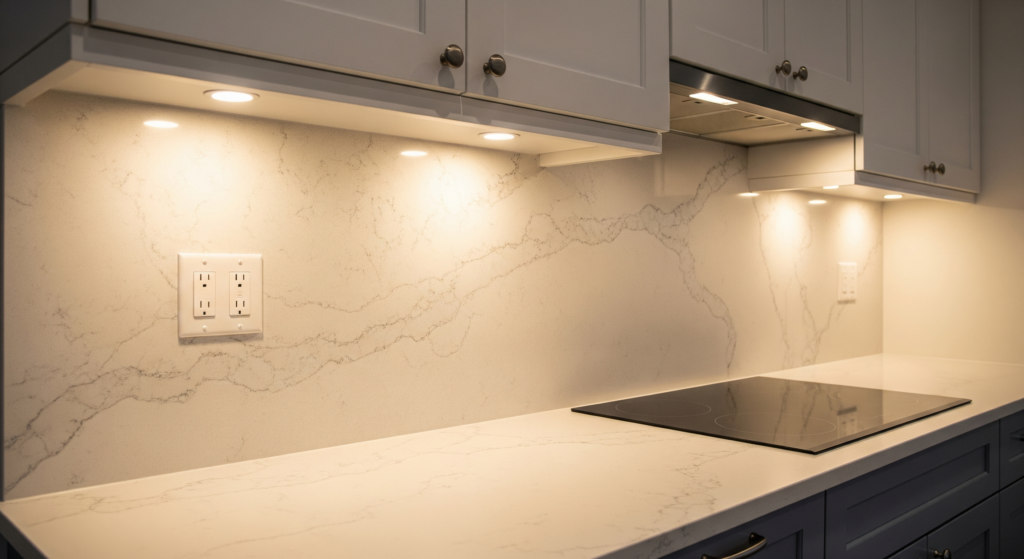
“The tile backsplash isn’t dead — but the slab has become the new benchmark for a polished, complete kitchen.”
The kitchen island has grown up
Islands are no longer just extra counter space. In current renovations, more than half of homeowners who have an island are upgrading it — and the majority are choosing islands over seven feet long. The reason: the modern island is expected to do multiple jobs at once.
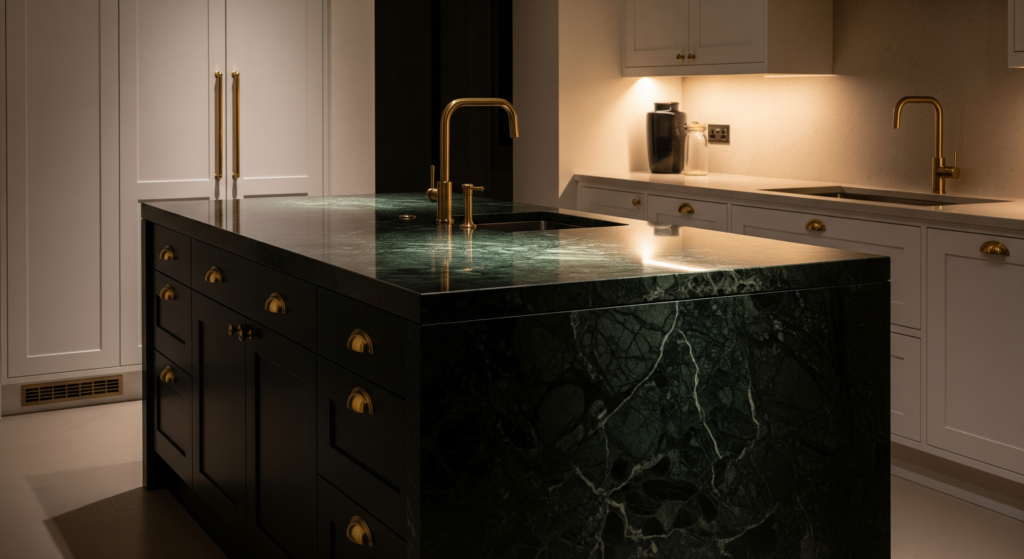
Built-in prep sinks, integrated induction cooktops, hidden charging stations, wine refrigerators, and deep drawer storage are all becoming standard additions. Waterfall edges — where the countertop material cascades down one or both sides of the island — add a sculptural quality that anchors the room. For materials, there’s growing appetite for contrast: a quartz or quartzite top paired with a warm wood base, or a bold dark-painted island against lighter perimeter cabinets.
What to consider when upgrading your island
- Plan plumbing and electrical rough-in before selecting cabinetry — changes after installation are costly
- A prep sink on the island reduces traffic to the main sink during meal prep
- Waterfall edges require precise fabrication — not all stone materials cut cleanly at corners
- Island overhang for seating should be a minimum of 12 inches for comfort
- Pendant lighting height: 30–36 inches above the countertop surface is the sweet spot
Color is back — but it’s strategic
All-white kitchens are not disappearing, but they’re evolving. The dominant move right now is using white or off-white on the most expensive, permanent elements — perimeter cabinets, upper cabinets, walls — and reserving color for surfaces that are easier and cheaper to update later.
Deep forest greens, navy blues, warm mushroom tones, and matte black are showing up most often on kitchen islands, lower cabinets, and accent walls. This approach gives homeowners the visual interest of color while protecting their investment: if a cabinet color falls out of fashion in a decade, replacing the island cabinetry is far less disruptive than redoing the entire kitchen.
For hardware and fixtures, warm metallics — unlacquered brass, brushed bronze, champagne gold — are replacing the cool nickel and polished chrome that dominated for the past decade. Mixing two or three metal finishes intentionally (matte black hardware with a brass pot filler, for instance) has become its own design statement.
Sinks as a design statement
The kitchen sink has quietly become one of the most design-forward elements in a renovation. Apron-front (farmhouse) sinks — once associated purely with rustic or country kitchens — are being reimagined in quartz and stone composites for a seamless, contemporary look. When the sink is fabricated from the same material as the countertop, the result is an integrated surface that’s both visually clean and exceptionally easy to maintain.
Undermount sinks remain the practical standard for their flush integration with stone countertops. But for homeowners building a kitchen from scratch or doing a full countertop replacement, the integrated stone sink is a quietly luxurious upgrade that’s gaining serious momentum.
Storage that disappears
Clutter-free countertops have become the defining aspiration of the 2025 kitchen. Appliance garages — enclosed cabinet sections that keep mixers, blenders, and coffee makers accessible but hidden — are one of the most requested additions in current renovations. Integrated refrigerators and dishwashers, paneled to match cabinetry, are no longer limited to high-end builds; they’re appearing across a wide range of budgets as homeowners prioritize visual calm over visual variety.
Floor-to-ceiling cabinetry is increasingly standard, maximizing vertical storage in kitchens of every size. Pull-out shelves, drawer organizers, and rotating corner inserts have replaced the dead space that used to live in kitchen corners and upper cabinets.
“The best storage is the storage you don’t notice — and that’s exactly what today’s homeowners are building.”
What this means for your renovation
The kitchen trends shaping renovation decisions right now share a common thread: longevity. Bold colors in reversible spots, seamless surfaces that eliminate grout maintenance, islands that serve real functional needs, storage that scales with how people actually cook — none of these are trends that will feel dated in five years.
If you’re planning a kitchen project, the most valuable investment you can make before selecting products is to think carefully about how you actually use the space. The fixtures, surfaces, and faucets you choose should serve your real daily life — not a magazine version of it.